Temperature and humidity sensors are essential tools utilized in numerous applications for monitoring environmental conditions. These sensors, also known as hygrometers, give accurate readings of the air's humidity levels at any specific point or location. They are often required in environments where extreme air conditions are present or where precise control over air conditions is needed for various reasons. The term humidity refers to the amount of water vapor present in the air, a factor that can influence both personal comfort and several industrial processes. For example, in the semiconductor industry, maintaining precise humidity levels is crucial for proper wafer processing. Control over humidity is also vital in areas like incubators, respiratory devices, sterilization equipment, and in the handling of biological products. Water vapor's presence can further impact many chemical, biological, and physical operations. The importance of humidity temperature meters extends beyond comfort, impacting industrial efficiency, personnel health and safety, and even product cost. A higher humidity level can make the air feel warmer, an aspect that must be considered in various industries. Thus, the role of temperature humidity sensors is paramount, providing critical data for numerous applications.
Download Technical DatasheetRelative humidity sensors typically consist of a humidity-sensing component coupled with a thermistor for temperature measurement. In the case of a capacitive sensor, the sensing element takes the form of a capacitor. This design relies on detecting changes in the electrical permittivity of the dielectric material, allowing for the calculation of relative humidity values. In constructing a Resistive sensor, materials with low resistivity are employed. This resistive material, situated atop two electrodes, undergoes changes in resistivity that correspond to variations in humidity, thus enabling its measurement. Examples of resistive materials utilized in Resistive sensors include salt, solid electrolytes, and conductive polymers. In contrast, thermal conductive sensors are used to gauge Absolute humidity values, providing a different approach to humidity measurement.
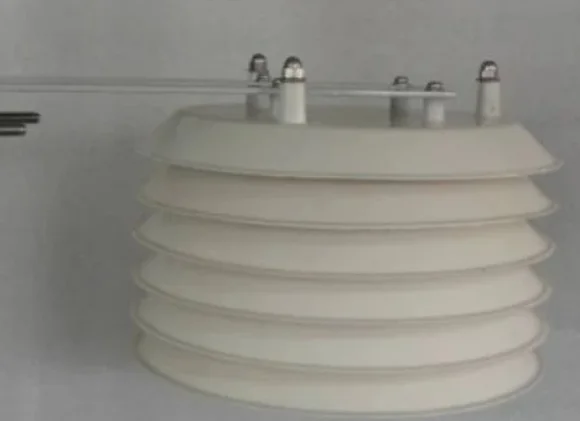
When selecting a temperature and humidity sensor, several factors must be considered to ensure a successful project and prolonged product lifespan. For the optimal choice of a temperature and humidity sensor for your particular application, it's essential to take into account the following considerations:
The specific frequency range to be measured is governed by the sensor's frequency response traits. It's vital that the monitoring conditions remain undisturbed within the allowed frequency range. Additionally, the sensor response may have some delay. Therefore, the sensor's frequency response should be high, and the range of the signal that can be measured must be wide. Conversely, if the sensor's measurable signal frequency is low, the frequency will be low as well.
When selecting a sensor, you must first ensure that its range meets the requirements, after identifying the sensor type. The linear range is defined as the range where the output is directly correlated to the input for the temperature and humidity device. Theoretically, sensitivity remains constant within this range. The broader the linear range of the sensor, the larger its range will be, ensuring a certain degree of measurement precision.
Stability refers to the ability of the temperature and humidity sensor to maintain consistency over time. The most significant factor affecting its long-term stability is the environment in which the sensor will be used. Prior to selecting a sensor, it's wise to investigate its compatibility with the environment where you intend to produce the products. Subsequently, you can select the most dependable sensor for that specific environment.
| Specifications | |
|---|---|
| Plate Diameter | 196 mm |
| Measuring Range | 0 to 100 °C |
| Sensor | PT100 Class A |
| Supply Voltage | 12 to 24 VDC |
| Protection | IP-67 |
| Response | < 15 secswith out filter |
| Protection | IP-65 for Transmitter |
| Plate Height | 110mm |
| Accuracy | ±0.5 °C |
| Housing Electronics | Poly carbonate watertight enclosure |
| Poly carbonate watertight enclosure | 12 to 26 VDC |
| Housing | ABS plastic watertight enclosure |
Reliable performance for solar monitoring applications
Delivers precise humidity readings with excellent response time and long-term stability.
Built for harsh outdoor conditions with durable, dustproof and waterproof protection.
Easy calibration process ensures high accuracy for field installations.
Low power consumption with simple installation and wiring.
Get Humidity Sensors at competitive pricing from Logics PowerAMR for solar plants.
Contact us today for Humidity Sensor cost and expert guidance.
Find answers to the most common queries below