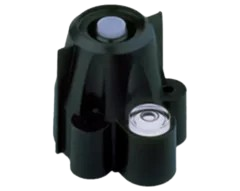
Solar Radiation Sensor Pyra 300V

The Solar Radiation Sensor, or solar pyranometer, measures global radiation, the sum at the point of measurement of both the direct and diffuse components of solar irradiance. The sensor’s transducer, which converts incident radiation to electrical current, is a silicon photodiode with wide spectral response. From the sensor’s output voltage, the console calculates and displays solar irradiance. It also integrates the irradiance values and displays total incident energy over a set period of time.

The sunlight sensor must be installed at the same azimuth and tilt angle than the PV array.

Download Technical Datasheet

Key Features of Pyranometer & Solar Radiation Sensor Pyra 300V

The Pyra 300V solar radiation sensor/pyranometer is a high quality instrument suitable for a variety of PV planning and research uses. Here are key features:

Precise Measure Solar Irradiance

Sensor measures not only direct but also diffused sunlight, which makes more reliable energy monitoring.

Broad Spectral Response

Ranges from 400 to 1100 nm to provide highly accurate results in various solar conditions.

Rugged Design (IP-66 Rated)

Ideal for outdoor installations, the IP-66 rated enclosure protects against windblown dust, rain, splashing water, and hose-directed water.

Live Data Feed (IoT & SCADA Compatible)

The THP-HD sensors convert sunlight into electrical signals with an output that is both IoT and SCADA compatible.

Simple Installation & Alignment

Can be mounted to face the PV array tilt and azimuth to reduce measurement errors.

Low Drift & High Stability

Ensures long-term accuracy with minimal yearly drift.

Technical Specifications: Solar Radiation Sensor Pyra 300V

Detailed performance metrics and environmental tolerances for Pyra 300V.

Sensor & Electrical Data

TransducerSilicon photodiode
Spectral Response400 to 1100 nm
Output (Full Scale)0 to 5 VDC (0 - 1800 W/m²)
Power Supply7-24 VDC 1mA (typical)
Drift±2% per year

Performance & Environmental

Operating Temperature-40° to +65° C
Storage Temperature-45° to +70° C
Accuracy±5% of full scale
Cosine Response±3% (0°-70°) / ±10% (70°-85°)
Temperature Coefficient+0.12% per °C (Ref: 25°C)
Housing MaterialUV-resistant PVC
Weight250 g

Applications of Pyranometer, Solar Radiation Sensor, and Irradiation Sensor

The Pyra 300V Pyranometer, solar radiation sensor, and irradiation sensor are widely used across industries where accurate solar measurement is essential.

Solar PV Plants

Use Case:

Monitors irradiation for rooftop and ground-mounted solar power plants.

Benefits:

Enhances system efficiency
Improves performance forecasting
Supports accurate power generation analysis

Weather Stations & Meteorology

Use Case:

Measures global radiation for climate and atmospheric monitoring.

Benefits:

Provides high-accuracy weather data
Supports climate research
Enables long-term environmental analysis

Agriculture & Greenhouses

Use Case:

Monitors sunlight exposure for optimized crop and plant growth.

Benefits:

Enables precision agriculture
Improves greenhouse energy management
Helps maintain optimal growth conditions

Research & Academia

Use Case:

Used in solar energy studies, environmental research, and lab experiments.

Benefits:

Provides precise scientific data
Supports modeling and simulation
Ideal for academic research projects

Smart Cities & IoT Projects

Use Case:

Integrates with IoT/SCADA platforms for remote solar monitoring.

Benefits:

Enables predictive maintenance
Supports real-time utility management
Enhances automation and smart analytics

Why Choose Logics PowerAMR

Your trusted partner for accurate solar irradiation monitoring

When you choose Logics PowerAMR, you receive not only high-precision pyranometers and solar radiation sensors, but also unmatched technical support and complete system integration expertise.

Our sensors are professionally calibrated to deliver maximum accuracy, fully compatible with IoT and SCADA platforms, and engineered to enhance overall PV plant performance.

Key Benefits

  • Expert guidance on sensor selection and installation
  • Reliable and consistent irradiation measurements
  • Seamless integration with remote monitoring systems
  • Long-term durability with reduced maintenance costs

Solar Radiation Sensor Mounting Guidelines

Follow these step-by-step instructions carefully to ensure accurate sensor leveling and cable security.

Initial Leveling: Using the bubble level on the sensor as a guide, adjust until perfectly leveled.
Radiation Sensor Height: The top must align slightly above the rim of the rain cone.
UV Sensor Height: Entire comb structure must remain visible above the cone rim.
Final Leveling: Do final leveling once ISS is installed in real position.
Cable Integrity: Ensure cables are straight without crimps.
Secure Cables: Tie cables firmly to avoid wind damage.
Final Test: Shade sensor – reading must change (function check).

Frequently Asked Questions

1. What makes a Class B pyranometer like PYRA 300-V suitable for performance monitoring?
It provides accurate solar irradiance data for performance ratio (PR) calculations and loss diagnostics, as required in IEC 61724-1 Class B-compliant PV monitoring setups.
2. How does solar irradiance data help EPCs and asset managers? +
It enables real-time benchmarking of expected vs actual energy yield and helps pinpoint efficiency drops due to shading, soiling, or even equipment faults.
3. Can this sensor be used in harsh outdoor environments? +
Of course, The PYRA 300-V is designed for long-term field use with a waterproof body as well as anti-reflective glass dome for stable performance.
4. Does the sensor come factory-calibrated? +
Yes, each unit is factory-calibrated and ready for deployment. For compliance, recalibration is recommended every 2 years.
5. Can the sensor output be read by existing solar loggers? +
Absolutely, it provides standard analog (voltage) output, making it compatible with most industry-standard data loggers and inverter monitoring systems.