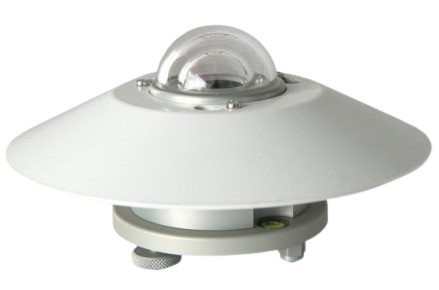
Irradiation Sensors Class 2 and Class 1 LSI Pyranometer

Irradiation sensors, commonly known as pyranometers, are precision instruments used to measure global solar irradiance on a horizontal or tilted surface. These sensors play a critical role in solar energy systems, meteorological stations, and environmental monitoring, providing accurate data for performance analysis, forecasting, and system optimization.

Download Technical Datasheet

Class 1 Pyranometer

Class 1 pyranometers offer high measurement accuracy and long-term stability, making them ideal for professional and research-grade applications. They comply with ISO 9060 secondary standard requirements and are widely used in utility-scale solar plants and scientific studies.

Key Features

  • High spectral and directional response accuracy
  • Excellent temperature stability
  • Low response time for dynamic irradiance measurement
  • Superior long-term reliability and calibration stability

Typical Applications

  • Utility-scale solar power plants
  • Performance Ratio (PR) calculations
  • Solar resource assessment
  • Research and meteorological stations

Class 2 Pyranometer

Class 2 pyranometers provide reliable and cost-effective solar irradiance measurement for general monitoring applications. They comply with ISO 9060 first class standards and are well suited for commercial and industrial solar installations.

Key Features

  • Robust and durable design
  • Stable performance in outdoor environments
  • Fast response suitable for real-time monitoring
  • Easy integration with data loggers and SCADA systems

Typical Applications

  • Rooftop and commercial solar plants
  • Solar monitoring systems
  • Weather monitoring stations
  • Educational and industrial applications

Benefits of Using Class 1 & Class 2 Pyranometers

Class 1 and Class 2 pyranometers provide accurate GHI measurements for reliable solar energy assessment. High-quality data supports performance analysis, efficiency optimization, and early detection of losses from soiling, shading, or sensor drift—reducing downtime and maintenance costs.

  • Accurate measurement of Global Horizontal Irradiance (GHI)
  • Enhanced solar plant performance analysis
  • Early detection of system losses and soiling
  • Weather monitoring stations
  • Supports predictive maintenance and energy forecasting
Ambient Temperature Sensor

Frequently Asked Questions

Find answers to the most common queries below

A pyranometer measures Global Horizontal Irradiance (GHI), capturing the total solar radiation received on a horizontal surface.

Class 1 offers higher accuracy and stability, while Class 2 provides cost-effective and reliable measurements for standard applications.

They comply with ISO 9060 classification standards for solar radiation measurement.

They are used in utility-scale solar plants, research facilities, and meteorological stations.

Yes, Class 2 pyranometers are ideal for performance monitoring and general solar assessments.

They enable accurate irradiance tracking, performance ratio calculations, and early detection of system losses.

Regular cleaning, inspection, and periodic calibration ensure long-term accuracy.

Yes, continuous monitoring helps identify irradiance deviations caused by soiling, shading, or sensor drift.