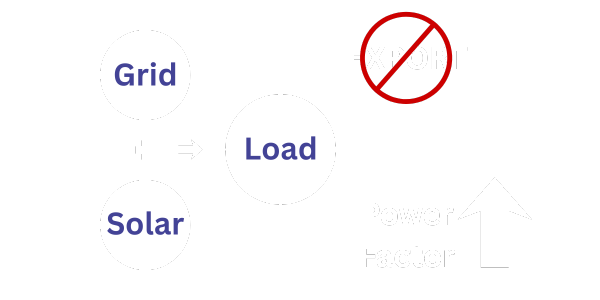
A Zero Export Controller ensures that your solar power plant never sends excess energy just back to the grid. Most of the DISCOMs really need strict non-export compliance, and without even a proper control device, reverse flow can trigger penalties or result in disconnection.
Our system gives you a neat and dependable way of controlling solar generation and thus, at the same time, safeguarding your grid connection. It continuously measures the load consumption, compares it with the inverter output, and therefore, if necessary, instantly adjusts the solar production to ensure that the export is zero.
In fact, this is what makes it ideal for commercial buildings, as well as all the industries that want to harness solar energy without even breaking the local grid regulations.

A zero export controller (ZEC) is a device that is used to manage the output of excess electricity generated by solar power systems that are connected to the grid. If your solar panel system produces more electricity than what you are using at your home, the excess will want to flow back into the grid. However, if this is not controlled properly, it creates several potential problems with the utility grid as well as compliance with utility regulations. Challenges Without a Zero Export Controller
Uncontrolled reversed power flow may negatively affect the stability of the grid and create voltage or frequency deviations.
Excessive power generation can cause the inverters to trip, which results in the loss of power, and the reliability of the solar electric system decreases.
Many utilities strictly prohibit power export without net metering approval, leading to penalties or disconnection risks.
Continuous reverse power flow can impact inverter health and may void manufacturer warranties if left unmanaged.
The Zero Export Control System rationally regulates the solar energy produced so that there is not a single watt of extra energy fed into the grid from the solar system. Thus, the system constantly synchronizes the solar energy with the system's own utilization so that the grid is secured, the inverters are secured, and the regulatory requirement regarding the prohibition of any solar export is fulfilled::
The live site measurement of gas consumption is accomplished by the CT sensors, while the power output of the inverter is tracked by the controller in order to maintain visibility into continuous power flows.
The controller reacts instantly to adjust the outputs of inverters if there is excess generation beyond the demand. Thus, at all times, the solar energy levels will match those of consumption.
In Fast Response Logic functions to eliminate reverse power flow by reacting to changes in the load within milliseconds while maintaining a zero-export condition.
The system provides for grid safety, inverter protection, governance compliance, and reliability in intelligent solar power control.
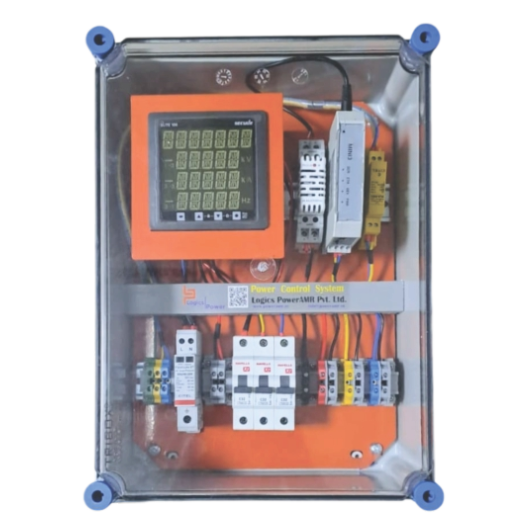
Logics Power's Zero Export System by Logics Power is designed in such a way so as to ensure a successful running of solar power plants even when hooked to the grid without any net metering. The system uses the grid strictly for voltage references so as to ensure that all solar-generated power is utilized in-house with no chance of any reverse energy flow to the grid. The benefit of doing so is to ensure maximum consumption of solar power even by institutions.
The heart of the system comprises a two-way meter, which continuously tracks the actual loads in real time. According to the minimum and maximum set levels, the controller optimally regulates the inverter output to set it in accordance with the actual demand. Usually, a nominal amount of power, in the order of 4-8% of the sanctioned power, can be received from the supply for stability.
Indicates active power at the grid point for clear visibility of the current load.
It instantly adjusts inverter outputs to correspond to site loads.
Functions to prevent any excess sun power from getting reintroduced into the mains.
Continuously controls the inverter output to synchronize the solar and load.
Find answers to the most common queries below