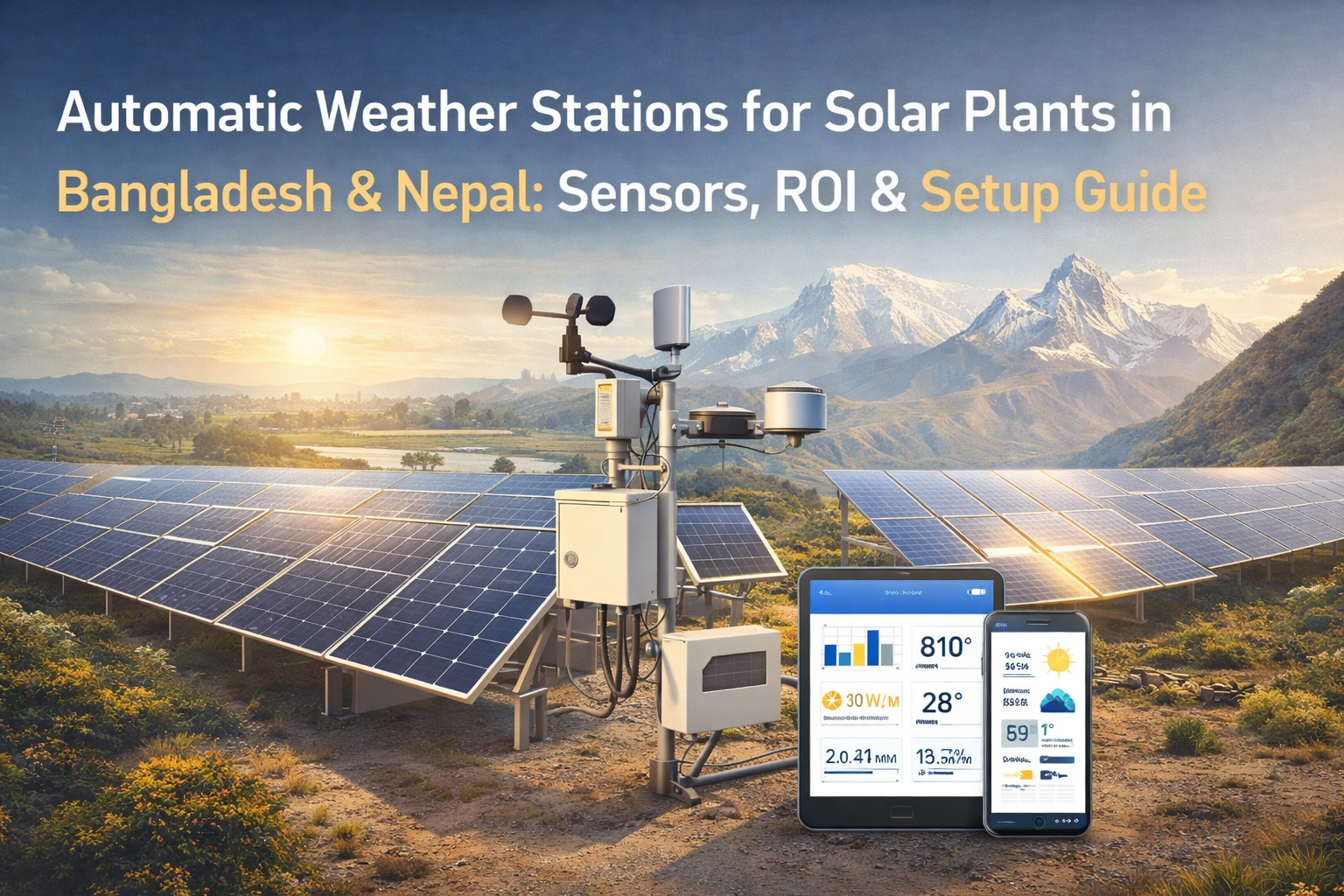
Solar energy projects in Bangladesh and Nepal are growing rapidly, but environmental factors like humidity, monsoons, and fluctuating weather conditions can significantly impact plant performance. To optimize energy generation and ensure accurate performance tracking, Automatic Weather Stations (AWS) are essential.
These systems provide real-time environmental data, helping operators make informed decisions and improve solar plant efficiency. In this guide, we’ll explore AWS components, benefits, ROI, and setup for solar plants in these regions.
Why Weather Monitoring is Critical for Solar Plants
Solar energy generation depends heavily on environmental conditions.
Without accurate weather data:
- Performance ratio (PR) becomes unreliable
- Forecasting errors increase
- Energy losses go unnoticed
Weather monitoring helps:
- Optimize plant performance
- Improve forecasting accuracy
- Detect system inefficiencies
What is an Automatic Weather Station (AWS)?
An Automatic Weather Station is a system of sensors and data loggers that measure environmental parameters in real time.
Key Functions:
- Measure solar irradiance
- Track temperature and wind conditions
- Provide data for performance analysis
Key Sensors Used in Solar Weather Monitoring
1. Pyranometer
- Measures solar radiation
- Critical for performance ratio calculation
2. Ambient Temperature Sensor
- Tracks surrounding air temperature
3. Module Temperature Sensor
- Measures panel temperature
- Helps detect efficiency losses
4. Wind Speed & Direction Sensor
- Ensures structural safety
- Helps optimize panel positioning
How AWS Improves Solar Plant Performance
1. Accurate Energy Forecasting
Better planning based on real-time weather data.
2. Performance Optimization
Identify underperforming panels or systems.
3. Fault Detection
Detect anomalies early and reduce downtime.
4. Data-Driven Decisions
Improve operations using reliable data insights.
Learn more about how weather data improves solar plant performance and why it matters for long-term efficiency
AWS Setup for Solar Plants (Step-by-Step)
Step 1: Site Selection
- Install in an open, obstruction-free area
Step 2: Sensor Installation
- Mount sensors at appropriate heights and angles
Step 3: Data Integration
- Connect AWS with solar monitoring systems
Step 4: Calibration & Testing
- Ensure accurate readings
ROI of Weather Monitoring in Bangladesh & Nepal
Investing in AWS can significantly improve returns:
- Increased energy yield
- Reduced maintenance costs
- Faster fault detection
Payback period is typically short due to efficiency gains.
Challenges in Bangladesh & Nepal
1. High Humidity
- Can affect sensor accuracy
2. Monsoon Weather
- Sudden changes impact generation
3. Data Reliability Issues
- Poor infrastructure can affect connectivity
AWS helps overcome these challenges with real-time monitoring.
Integration with IoT & Solar Monitoring Systems
Modern AWS systems integrate seamlessly with IoT platforms:
- Cloud-based dashboards
- Remote monitoring
- Real-time alerts
This enables complete visibility of plant performance.
Why Logicspower is a Reliable Choice
Logicspower provides advanced weather monitoring solutions tailored for solar plants.
Key benefits:
- High-accuracy sensors
- Seamless integration with monitoring systems
- Durable equipment for harsh environments
FAQs
1. What is the cost of an automatic weather station?
Costs vary based on sensors and system features.
2. Which sensors are essential for solar plants?
Pyranometer, temperature sensors, and wind sensors are critical.
3. Is AWS mandatory for solar plants?
It is highly recommended, especially for performance tracking and compliance.
4. Can AWS integrate with existing monitoring systems?
Yes, most modern systems support integration.
Conclusion
Automatic Weather Stations play a vital role in improving solar plant efficiency, especially in regions like Bangladesh and Nepal, where weather conditions can be unpredictable. By investing in a reliable AWS solution, solar operators can enhance performance, reduce losses, and maximize ROI.
Looking to optimize your solar plant with accurate weather data? Get in touch with Logics Power for smart and reliable AWS solutions.