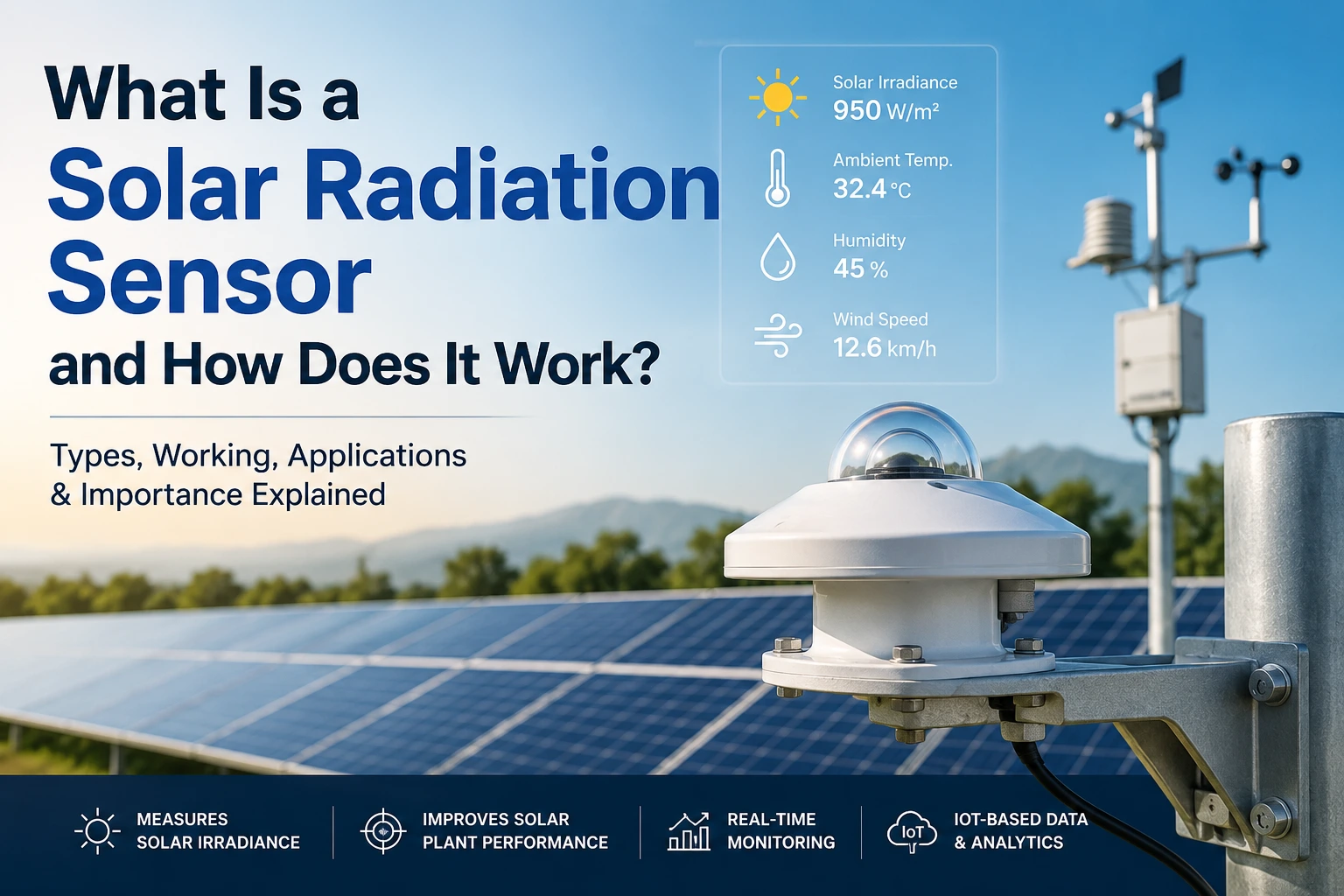
What Is a Solar Radiation Sensor and How Does It Work?
Solar energy is growing at a fast pace, but to get the most out of that, we need to map out how the sunlight is available each and every day. Environmental monitoring plays a major role in keeping the solar functioning in an efficient and smooth manner. The heart of this technique and tracking is the solar radiation sensor. By doing precise measurement of sunlight falling at a real-time rate, these devices provide information to the operators to optimize for high performance and catch even the slightest of the issues before they can become major problems. Understanding solar radiation monitoring is the initial step towards creating a smart and reliable solar power system for getting clean energy every day.
What Is a Solar Radiation Sensor?
A solar radiation sensor is a basic but accurate device that can measure the intensity of sunlight that can reach the Earth’s surface. Think of that as the professional light meter that’s built specifically for energy tracking. This can capture exactly how much solar power can hit a major area in any given moment.
These sensors are used across multiple cases like climate research, solar power plants, and outdoor weather monitoring system setups. This can act as a precise solar irradiance sensor, thus giving the engineers the right data they need for the prediction of energy output and adjustment of panel angles and the optimization of overall solar generation. Without this data, solar operators can be guessing instead of planning.
Why Is Solar Radiation Monitoring Important?
Tracking of sunlight is not just interesting; this is important. Solar radiation monitoring can improve efficiency by showing exactly how much energy is available for conversion to electricity. With the operators having the right sunlight data, they can analyze the energy trends, spot a drop in output, and detect any kind of performance issue like unexpected shading or dirty panels.
This data also supports predictive maintenance, meaning repairs happen even before any kind of breakdown happens.
Finally, this can enhance operational planning for helping teams schedule grid power, manage battery storage, and make smarter daily decisions. In short, proper solar plant monitoring can turn unpredictable sunlight into reliable and steady power.
How Does a Solar Radiation Sensor Work?
Basically, the sensor uses a transparent glass or film layer to detect solar radiation. The sensor turns light energy into a tiny, detectable electrical signal when sunlight hits this surface. A data collector or control device gets this signal after that. Bigger scanning systems collect the data after that, usually with the help of real-time monitoring tools. These options offer operators with instant access to real-time light levels by linking to SCADA software and Internet of Things networks easily. It becomes a vital part of any contemporary power or weather monitoring system since it works continuously and sends updates instantly.
Types of Solar Radiation Sensors
Not all the sensors are created the same. Here are the three common types:
-
Pyranometer: This is the most highly used sensor in the industry. This measures the global solar radiation, meaning that it captures both sunlight and scattered light from the sky.
-
Pyrheliometer: Unlike the pyranometer, this device can measure the direct beam radiation from the sun. This is used as a narrow tube for blocking out the skylight, thus making it perfect for solar tracking.
-
Photovoltaic Sensor: A cost-effective and simpler alternative. This uses a solar cell for the estimation of sunlight levels. While not as precise as these scientific tools, this is great for basic daily checks. Each solar irradiance sensor can serve a specific purpose, thus depending on the data needs.
Applications of Solar Radiation Sensors
These sensors can be used across the important fields:
-
Solar Power Plants: Tracking output and optimization of panel performance.
-
Weather monitoring stations: Recording of climate and sunlight patterns.
-
Smart Framing and Agriculture: Planning of crop growth cycles and irrigation.
-
Research & Environmental Monitoring: Studying climate change and energy trends.
-
Industry Energy Monitoring: Management of on-site renewable power plus grid usage.
Benefits of Using Solar Radiation Sensors
Using the right type of sensors can bring that for a clear advantage for any solar project:
-
Accurate Solar Energy Analysis: Getting the exact sunlight measurements for matching the real-world energy production.
-
Improved Plant Performance: Use of data for adjustment of panels and maximization of daily output.
-
Real-Time Monitoring: Watching the sunlight levels that can change instantly, allowing quick responses for cloud cover or the weather shifts.
-
Better Maintenance Planning: Spotting of unusual drops for irradiance for finding faulty or dirty panels.
-
Enhanced Energy Forecasting: Prediction of tomorrow’s power generation that’s based on the sunlight trends, making the grid management better.
Solar Radiation Sensor vs. Pyranometer
What is an impact? It is a common question. In short, a pyranometer is a type of superior sun radiation sensor. Not all sunlight sensors are pyranometers, but all pyranometers are solar radiation sensors. Pyranometers detect the total amount of sunshine and are quite reliable. They are common throughout both industrial and scientific sectors. Other sensors, like photovoltaic reference cells, are employed for basic checks and are not as expensive. A pyranometer is the most effective option for large solar farms that need accurate information. A simple irradiance sensor is an excellent option for fast and cheap tracking.
How IoT Improves Solar Radiation Monitoring
Modern technology has made tracking sunlight much easier than ever before. For IoT, sensor data can move directly to cloud dashboards where teams can view the device. Remote monitoring can mean engineers that don’t need to visit the site for checking of readings.
The automated alerts can notify the staff when the sunlight can drop in an unexpected manner or the sensor can drift out of range. The data analytics can easily turn these raw numbers into clear charts plus simple reports. Paired with a weather monitoring system using IoT, these tools can connect directly to central control platforms, creating an automated smart energy network that can save time and reduce human error.
Factors to Consider When Choosing a Solar Radiation Sensor
Choosing the right device is necessary. To ensure consistent outcomes year after year, first check precision and calibration standards. Look for environmental reliability—sensors need to be capable of enduring prolonged UV exposure, extreme temperatures, dust, and downpours. For the purpose of a sensor to interact with your present data loggers or cloud-based applications, communication compatibility is required. Analyze the upkeep needs; maintenance-free models save time and long-term costs. Lastly, verify that your present monitoring tools can connect. Choosing a well-matched sensor maintains your facility running efficiently and avoids data gaps.
Why Solar Radiation Sensors Are Important for Solar Power Plants
For large solar installations, these sensors are non-negotiable. They can calculate the performance ratio and show exactly how well the panels can convert available sunlight to electricity. For tracking of irradiance, operations can optimize the generations, adjust the inverter settings, and reduce energy waste.
Sensors can enable fast fault detection; if the sunlight is high but the output is low, something is not correct. This can boost overall operational efficiency and protection of daily revenue. For the right results, pair that with reliable, complete, and advanced (SCADA solutions) for the creation of a fully connected and high-performing power plant.
Why Choose LogicsPower for Solar Monitoring Solutions?
You need collaborators who are educated in both technology and real-time information while building a smart solar setup. Advanced systems for monitoring built for real field circumstances are offered by LogicsPower (PowerAMR). Their structures have high-quality industrial sensors that are durable for years, high-quality weather monitoring sets, and a simple IoT connection. LogicsPower lets solar operators convert raw sunlight data into basic, actionable insights, keeping facilities profitable, safe, and effective with its transparent real-time analytics and easy plug-and-play setup.
Conclusion
A solar radiation sensor is a small yet powerful tool that can make modern solar energy highly efficient and reliable. By tracking the sunlight in an accurate manner, this can help improve plant performance, reduce downtimes, and support better energy planning. As the need for renewable power grows, these sensors will play a major role in future-ready and sustainable infrastructure.