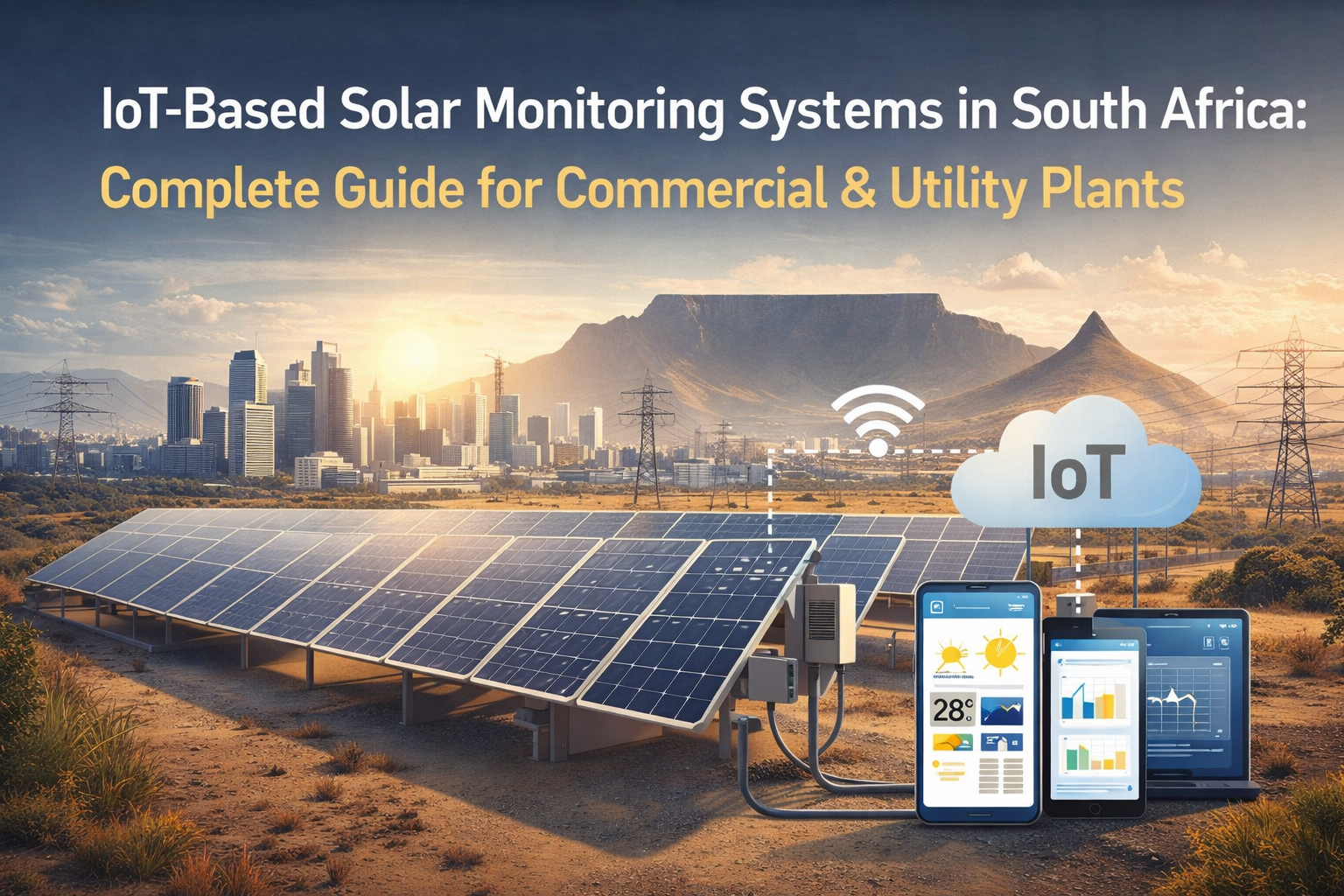
South Africa’s energy landscape is rapidly evolving, driven by frequent load shedding and increasing reliance on solar power. For businesses and utility-scale operators, simply installing solar panels is no longer enough; efficient monitoring is critical to ensure maximum performance and ROI.
This is where IoT-based solar monitoring systems play a transformative role. These systems provide real-time insights, remote access, and predictive analytics, making them ideal for South Africa’s distributed and grid-challenged environment.
In this guide, we’ll explore how IoT-based solar monitoring works, its benefits, and how to choose the right system for your solar project.
Why Solar Monitoring is Critical in South Africa
South Africa faces unique challenges:
- Frequent power outages (load shedding)
- Distributed solar installations across large areas
- Energy losses due to a lack of visibility
Without proper monitoring:
- Faults go undetected
- Energy production drops
- Maintenance costs increase
A smart monitoring system ensures:
- Real-time tracking
- Faster fault resolution
- Improved plant efficiency
What is an IoT-Based Solar Monitoring System?
An IoT-based solar monitoring system uses connected devices, sensors, and cloud platforms to track and manage solar plant performance remotely.
How it works:
- Sensors collect data (irradiance, temperature, voltage)
- Data loggers transmit information
- Cloud platform analyzes and displays insights
Users can monitor everything via:
- Web dashboards
- Mobile apps
Key Components of an IoT Solar Monitoring System
1. Data Loggers
- Collect and transmit system data
2. Sensors
- Solar radiation sensor
- Ambient & module temperature sensors
- Wind speed sensors
3. Cloud Platform
- Stores and processes data
- Provides dashboards and reports
4. Communication Network
- GSM / Wi-Fi / Ethernet
Benefits for Solar Projects in South Africa
1. Real-Time Monitoring
Track performance instantly and detect anomalies.
2. Remote Access
Monitor multiple sites from anywhere, critical for distributed installations.
3. Predictive Maintenance
Identify issues before they become costly failures.
4. Improved ROI
As solar adoption grows, many businesses are also exploring the best solar monitoring solutions to improve performance and reduce downtime.
IoT vs SCADA: Which is Better for South Africa?
| Feature | IoT | SCADA |
|---|---|---|
| Cost | Lower | Higher |
| Scalability | High | Limited |
| Remote Access | Strong | Moderate |
| Best For | Distributed systems | Large centralized plant |
IoT is better suited for South Africa’s decentralized solar ecosystem.
How to Choose the Right Solar Monitoring System
Plant Size
- Small to mid-scale → IoT
- Utility-scale → Hybrid (IoT + SCADA)
Connectivity
- Rural areas → Ensure GSM/4G compatibility
Budget
- IoT offers lower upfront cost
Integration
- Ensure compatibility with inverters and existing systems
Real-World Use Cases in South Africa
Commercial Rooftop Installations
- Monitor performance across multiple buildings
Mining Sector
- Remote monitoring in isolated areas
Utility Solar Farms
- Combine IoT + SCADA for full visibility
Common Mistakes to Avoid
- Ignoring sensor calibration
- Choosing systems without remote alerts
- Not analyzing collected data
- Poor network setup
Why Logicspower is a Trusted Solar Monitoring Partner
Logicspower offers advanced IoT-based solar monitoring solutions designed for challenging environments like South Africa.
Key advantages:
- Real-time cloud-based monitoring
- High-precision sensors
- Scalable solutions for all plant sizes
- Seamless integration with solar systems
FAQs
1. What is the cost of IoT solar monitoring in South Africa?
Costs vary depending on plant size and features, but IoT systems are generally more affordable than SCADA.
2. Can I monitor multiple solar plants remotely?
Yes, IoT systems allow centralized monitoring of multiple locations.
3. Is internet required for IoT monitoring?
Yes, but systems can work with GSM/4G networks in remote areas.
4. Is IoT monitoring reliable for large solar plants?
Yes, especially when combined with SCADA for hybrid setups.
Conclusion
IoT-based solar monitoring systems are transforming how solar plants operate in South Africa. With real-time insights, remote accessibility, and cost-effective deployment, they are the ideal solution for modern solar projects. By investing in solar monitoring systems, businesses can significantly improve efficiency, reduce downtime, and maximize returns.
Ready to get more out of your solar investment? Connect with Logics Power to find the right monitoring solution for your project.