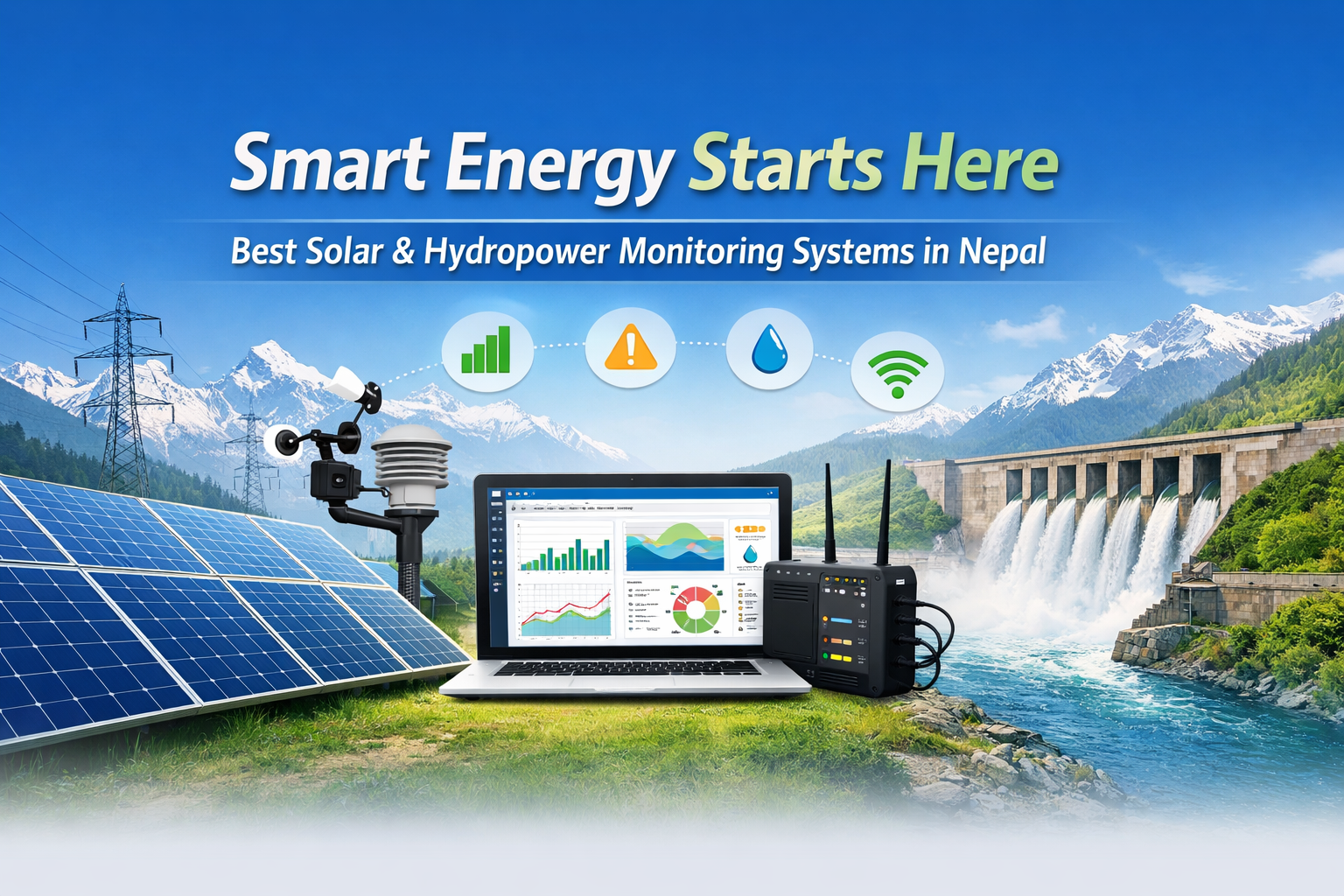
Many solar and hydropower plants in Nepal don’t perform at their full capacity. Actually, the reason is simple. Most of the sites are remote, and performance is checked just once in a while. Small issues such as panel faults, sensor errors, or sometimes weather impact slowly reduce output of the energy.
And, without real-time tracking, these losses continue for several days or sometimes even weeks. A remote monitoring system helps solve this problem as it provides operators with clear performance data, instant alerts, along with better control over operations.
In this blog, we’ll understand how remote monitoring systems work, what features are most useful in Nepal, how much they actually cost, and how they can enhance long-term energy output. Furthermore, you’ll also learn how to choose the right solution for solar and hydropower projects in remote locations.
What Is a Remote Monitoring System for Solar & Hydropower?
A remote monitoring system isn’t just a tool that shows some data on a screen. Beyond that, it’s a comprehensive remote monitoring solution that helps you understand how a solar plant or even a hydropower project is actually performing every hour of the day. Rather than being dependent on manual checks or delayed reports, the system gathers real-time data, analyzes performance trends, and then highlights where exactly energy is being lost or where maintenance is really required.
In practical terms, it enables operators to answer 3 crucial questions immediately:
Is the plant producing the expected energy?
Is there any component that’s underperforming?
And does the issue require immediate action or preventive maintenance?
How Does the System Actually Work?
A modern remote monitoring system works by connecting different components of the plant to a single smart platform. Here, each component plays a specific role in improving visibility and efficiency.
IoT Devices
IoT devices work as the brain of the system. These devices collect real-time performance data from inverters, turbines, panels, and other control units.
A smart remote monitoring solution utilizes these devices in order to identify even small efficiency drops that are usually missed during manual inspections.
Sensors
Sensors measure the condition that directly affects energy output. For solar plants, this involves temperature, voltage, current, and irradiance. For hydropower, it includes water flow, pressure, along with turbine performance. Now, these insights help operators comprehend not just what exactly is happening, but also why it’s happening.
Cloud Dashboard
Cloud-based dashboard receives all the collected data and converts it into clear and useful insights. Rather than complex technical data, operators observe performance trends, alerts, along with efficiency reports in a simple format. This makes it completely easier to make decisions faster, especially when the plant is located in a remote location.
Why Remote Energy Monitoring Is Critical in Nepal?
A reliable remote monitoring system in Nepal is truly essential for improving energy efficiency and ensuring stable performance in solar and hydropower projects. Here are the key reasons why remote monitoring is becoming critical for energy operators in Nepal:
-
Terrain Challenges and Remote Locations: Most solar and hydropower plants are located in mountainous areas where continuous inspections are really tough. A remote plant monitoring and energy monitoring system plays a key role here to track performance without even frequent site visits.
-
Heavy Dependence on Solar and Hydropower: Nepal relies heavily on renewable energy sources. Even small performance drops can minimize overall output. So, these monitoring systems help maintain consistent energy production.
-
Need for Real-Time Monitoring and Alerts: Delayed fault detection increases downtime and repair costs. A modern real-time monitoring system with IoT energy monitoring helps operators detect issues earlier and then improve overall plant performance.
Key Features to Look for in Nepal
If you’re also planning to install a monitoring system for a solar or even hydropower project, here are some of the key features that you should look for. These features are especially crucial in Nepal, where remote locations, weak connections, and dynamic weather conditions can affect the performance of the plant:
-
Real-Time Monitoring
Always look for real-time monitoring, it helps you detect energy loss, inverter faults, or even turbine issues immediately. Faster detection leads to quicker action and less downtime.
-
Offline Data Sync (Low Connectivity Areas)
Numerous solar and hydropower sites in Nepal face unstable internet connectivity. And, a reliable system should store data offline and sync it automatically when the connection is restored.
-
Weather Integration
The weather actually has a direct impact on energy output. With weather integration, you can clearly identify whether low performance is caused by poor sunlight or it’s a technical issue.
-
SCADA Compatibility
Several large projects are already using SCADA systems. A monitoring system that integrates easily with SCADA saves time, lessens cost, and makes plant management much easier.
Best Remote Monitoring Solutions in Nepal (Comparison)
|
Solution Type |
Key Features |
Cost Level |
Scalability |
Best For |
|
LogicsPower Remote Monitoring Solution |
Real-time monitoring, offline data sync, weather integration, SCADA compatibility, smart analytics |
Medium |
High |
Solar and hydropower projects in remote areas |
|
Basic Monitoring Systems |
Limited real-time data, simple dashboards, basic alerts |
Low |
Low |
Small solar projects |
|
Traditional Monitoring Setup |
Manual reporting, delayed performance tracking |
Low–Medium |
Low |
Older energy projects |
Cost of Remote Monitoring Systems in Nepal
The cost of a remote monitoring system in Nepal actually depends on the size of the project along with the features you really need. Rather than looking at only the total cost, it’s far better to understand where the money is actually spent.
Hardware Cost
It involves IoT devices, sensors, as well as data loggers. Larger solar hydropower projects require even more advanced hardware for accurate performance tracking.
Software / Subscription Cost
Most of the systems work on a cloud-based platform with a monthly or sometimes yearly subscription. It provides you with real-time data, alerts, and performance reports.
Installation Cost
It covers device setup, sensor integration, and testing of systems. Proper installation helps the system work accurately from the start.
ROI: Why It Is Worth the Cost
With a good monitoring solution, you’re able to reduce energy loss, avoid sudden repairs, and improve overall performance. Over time, this helps restore the cost and increase overall long-term returns.
Step-by-Step Implementation Guide
Installing a remote monitoring system is not complicated if it is done in the right order. The key is to focus on accuracy and long-term performance rather than just quick installation.
1. Site Assessment
The very first step is to properly understand the project location and energy setup. In this phase, checking internet connectivity, power points, plant size, along with components that need monitoring are involved.
A proper site evaluation helps avoid mistakes during installation and ensures the system collects accurate data from the initial phase.
2. Hardware Installation
Once the site is precisely analyzed, the needed IoT devices and data loggers are installed. These devices are connected to inverters, turbines, and control units.
Proper installation is crucial as even small mistakes can have a negative impact on the accuracy of performance data.
3. Sensor Integration
After hardware installation, sensors are then added to measure important parameters such as voltage, current, temperature, and energy output.
For hydropower projects, sensors can also track water flow and pressure. This step helps the system collect real-time, reliable data.
4. Dashboard Setup
All the gathered data is then connected to a cloud-based dashboard. The dashboard is configured according to the size of the project and monitoring preferences.
It allows operators to get insight into performance reports, alerts, and energy output in a straight and easy-to-understand format.
5. Testing and Final Check
Before the system is completely activated, everything is tested properly. It involves checking real-time data accuracy, alert notifications, and system performance. Proper testing makes sure the monitoring system works smoothly and delivers reliable results from day 01.
Challenges in Nepal & How to Solve Them
Implementing a monitoring system in Nepal indeed comes with various real challenges. Remote locations, unstable connectivity, as well as harsh weather conditions can affect both performance tracking and system reliability.
The key is to choose a solution that’s designed for both conditions. Here are some of the key challenges with solutions:
Connectivity Issues
Many solar and hydropower projects are located in areas with weak internet. A reliable monitoring system should store data locally and sync it automatically when the connection is available. This ensures accurate performance tracking even in low-connectivity areas.
Harsh Weather Conditions
Extreme temperatures, rain, and dust badly affect both equipment and monitoring devices.
Utilizing durable hardware and weather-resistant sensors helps maintain reliable performance and reduce maintenance problems.
Remote Access to Project Sites
It can take hours to reach remote sites. Due to this, small issues are mostly ignored until they become serious ones.
A remote monitoring system helps identify problems early so that operators can take action without unnecessary site visits.
Why Choose LogicsPower for Nepal Projects
For solar and hydropower projects in Nepal, the monitoring system should always work reliably in remote locations, low-connectivity areas, and changing weather conditions.
LogicsPower primarily focuses on solutions that help operators track performance smartly and accurately and improve long-term energy efficiency. Here’s what makes LogicsPower stand out:
-
End-to-end deployment support
-
Reliable monitoring in remote locations
-
Scalable IoT-based solutions
-
Accurate real-time performance insights
Conclusion
So, better monitoring leads to better energy performance. For solar and hydropower projects in Nepal, the right system always helps reduce energy loss, improve overall efficiency, and ultimately make smarter decisions in real time.
If you want a solution that reliably works in remote locations and delivers long-term value, LogicsPower can help you implement a smarter and even more efficient monitoring system.