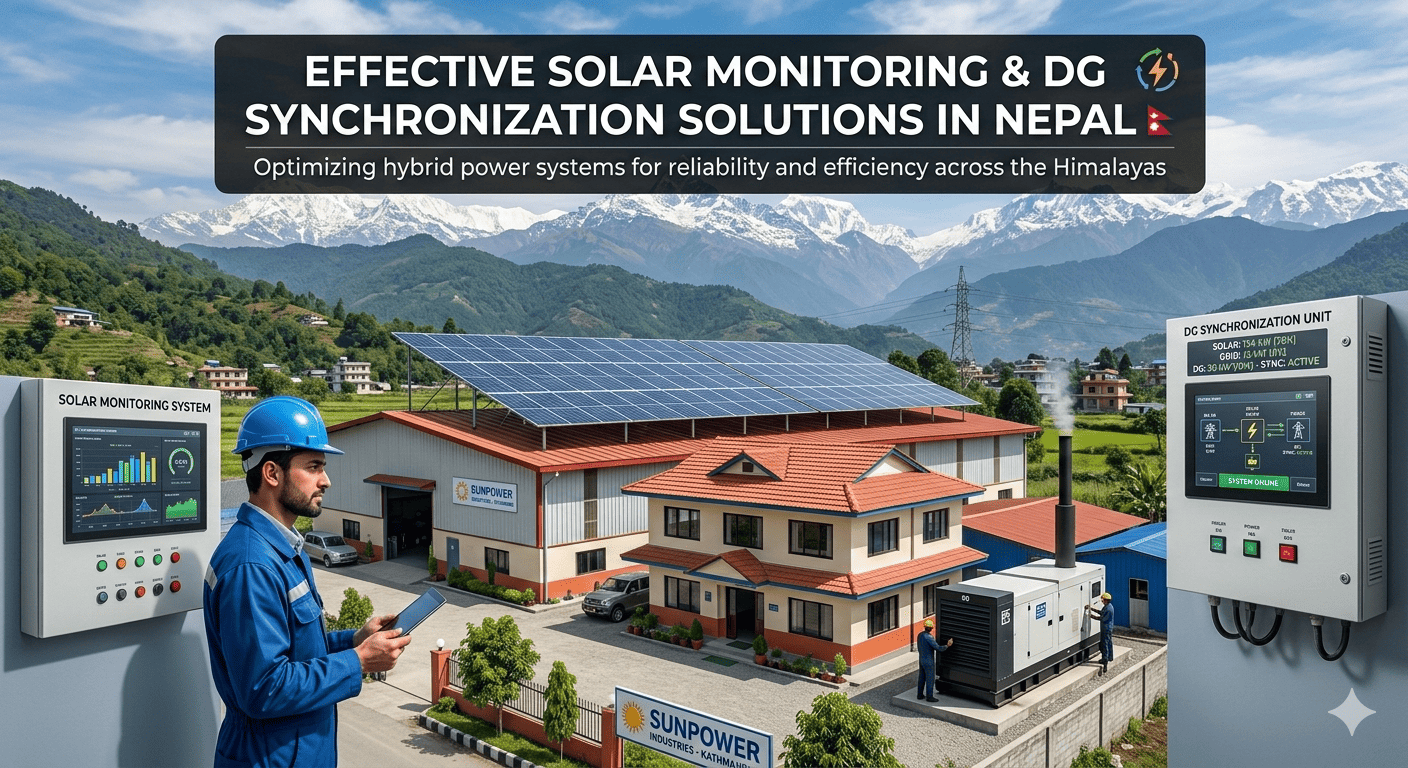
The energy landscape in Nepal is changing at a fast pace due to the increasing use of solar energy in remote, semi-urban, and mountainous areas. But due to regular instability in the power grid, topography, and reliance on diesel generators, power reliability is a big concern. This is where a Solar Monitoring System in Nepal and DG synchronization with solar energy is critical for smooth and efficient power production.
A remote solar monitoring system with an advanced solar DG synchronization controller is the best solution for the challenging energy landscape of Nepal.
Nepal’s Energy Scenario & Challenges in Hybrid Power Solutions
Nepal’s topography and infrastructure constraints make it difficult to establish a centralized power supply network. In many areas, hybrid energy solutions involving solar power and diesel generators (DGs) are essential.
Major Energy Issues in Nepal
Inaccessible Areas & Remote Locations
Villages, telecom towers, and industrial areas are often situated in distant areas with unstable power supply networks, making solar and DG hybrid energy solutions essential.
Excessive Dependence on Diesel Generators
Power disruptions and lack of grid connectivity make DGs the most important secondary power source, resulting in high fuel consumption and pollution.
Fluctuating Grid Patterns
Voltage fluctuations, power failures, and erratic power supply patterns affect sensitive electrical appliances.
Difficulty in Mountain Terrain Monitoring
Adverse climatic conditions, high altitudes, and communication constraints make it difficult to monitor mountain terrain energy patterns.
High Operating Costs
Manual monitoring, fuel pilferage, and inefficient load sharing contribute to high operating costs.
Why Solar + DG Hybrid Systems Need Smart Synchronization
Solar and DG hybrid systems without smart synchronization can be inefficient, resulting in unnecessary diesel consumption even when solar energy is available. This will directly impact fuel bills and the return on investment of the solar energy system. Smart synchronization always gives priority to solar energy.
In DG hybrid systems without proper synchronization, load imbalance is a problem. Abrupt changes in loads from solar energy to diesel generators or vice versa can lead to voltage instability and fluctuations in power output. Smart synchronization ensures stable and smooth operation of the system.
Another serious problem with unsynchronized systems is damage to equipment. Unnecessary switching between solar energy, the grid, and diesel generators can lead to voltage spikes, damaging inverters, batteries, and appliances connected to the system. Smart DG synchronization prevents damage to equipment and prolongs system life.
In hybrid systems involving DGs, manual control can lead to increased human error and reaction time. This can result in generators not being turned on or off at the correct time, leading to downtime or diesel fuel wastage. Smart synchronization does not require manual intervention.
IoT-Based Solar Monitoring System for Nepal
An IoT-based Solar Monitoring System in Nepal provides a comprehensive view and control of solar and hybrid plants, particularly in rural areas of Nepal.
Step 1: Sensor & Device Data Collection
IoT-based sensors and smart meters are placed on solar panels, inverters, batteries, and DG systems. These sensors and smart meters continuously collect data on solar power generation, voltage, current, and system status. This is the starting point for an accurate solar monitoring system.
Step 2: Inverter & DG Controller Integration
The solar monitoring system is fully integrated with solar inverters and DG PV controllers. This integration enables simultaneous monitoring of solar power generation, diesel generator, and load consumption. This ensures complete monitoring of the hybrid solar DG synchronization process.
Step 3: Secure Data Transmission to Cloud
The collected data is transmitted securely through GSM, Ethernet, or internet connectivity to a cloud server. Even in Nepal’s remote and mountainous areas, the remote solar monitoring system ensures seamless data transmission. This enables real-time monitoring without the need for physical presence.
Step 4: Real-Time Remote Monitoring Dashboard
The entire system data is presented on a cloud-based solar monitoring app or web portal. Users can monitor real-time performance, energy consumption, notifications, and system status from anywhere. Multi-location monitoring is possible through a single common dashboard.
Step 5: Performance Optimization & Reporting
Historical data and analytics are used to optimize solar utilization and DG operation. Comprehensive reports are used for energy planning, fuel optimization, and decision-making. This ensures optimal use of the Solar Monitoring System in Nepal.
Important Characteristics of IoT Solar Energy Management
1. Real-Time Performance Monitoring - Live monitoring of solar generation, DG condition, and load consumption.
2. Remote Fault Identification- Immediate notifications for inverter faults, grid outage, or DG problems.
3. Cloud Storage of Data- Secure access to historical data for evaluation and compliance purposes.
4. Inverter Management Compatibility- Smooth integration with popular inverter models.
5. Multi-Site Scalability Solution - Suitable for telecom, industrial, and utility-scale applications.
6. Simple and Intuitive Interface- Customized and simple interfaces for operations and management.
DG Synchronization & Smart Controller Solutions
DG synchronization with solar energy is an important aspect of efficient hybrid power system management. The smart DG PV controller ensures that solar energy is utilized as the prime source before the diesel generator is activated. This intelligent management process helps to minimize fuel consumption and costs. The automatic switching between solar and DG helps to eliminate power outages and voltage instability. This process also enhances system stability in areas where the grid is unstable.
The smart solutions for the controller help to facilitate advanced load management and monitoring of the system. The remote monitoring system helps to offer insights into DG operation time, solar power production, and load management. The automated system helps to eliminate human error and intervention. The system safeguards the equipment against damage from improper switching and overload conditions. The DG synchronization process helps to improve the reliability and sustainability of hybrid power systems.
Smart DG Synchronization Benefits
1. Optimized Fuel Consumption - Diesel fuel costs are significantly reduced.
2 Equipment Life Extension- Less strain on DGs and inverters.
3. Enhanced Power Reliability- Uninterrupted power supply.
4. Lower Maintenance Expenses- Predictive maintenance notifications prevent costly repairs.
5. Automated Processes- Less human intervention required.
6. Sustainable Energy Consumption- Maximizes solar power usage.
Remote Site Monitoring with Weather Sensors
Weather conditions have a great impact on the performance of solar systems, particularly in mountainous areas like Nepal. A sophisticated remote monitoring system incorporates environmental sensors for precise analysis.
Must-Have Weather Sensors for Solar Monitoring
Wind Speed Sensor- Aids in safeguarding panels and structures during strong winds.
Wind Direction Sensor- Offers data for structural and safety analysis.
Irradiation Sensor- Monitors solar intensity to compare actual and expected power output.
Module Temperature Sensor- Monitors panel temperatures to avoid overheating and performance degradation.
Ambient Temperature Sensor- Aids in precise performance simulation.
Get a Customized Solar Monitoring Solution in Nepal
Each solar power system in Nepal has its own set of challenges, ranging from geographical to grid-related issues. With a customized Solar Monitoring System in Nepal and solar DG synchronization, maximum efficiency and cost-effectiveness are achieved.
With the implementation of an intelligent remote monitoring system, organizations can have complete control over their energy resources. Contact Logics power for Solar monitoring and Dg Synchronization Solution in Nepal