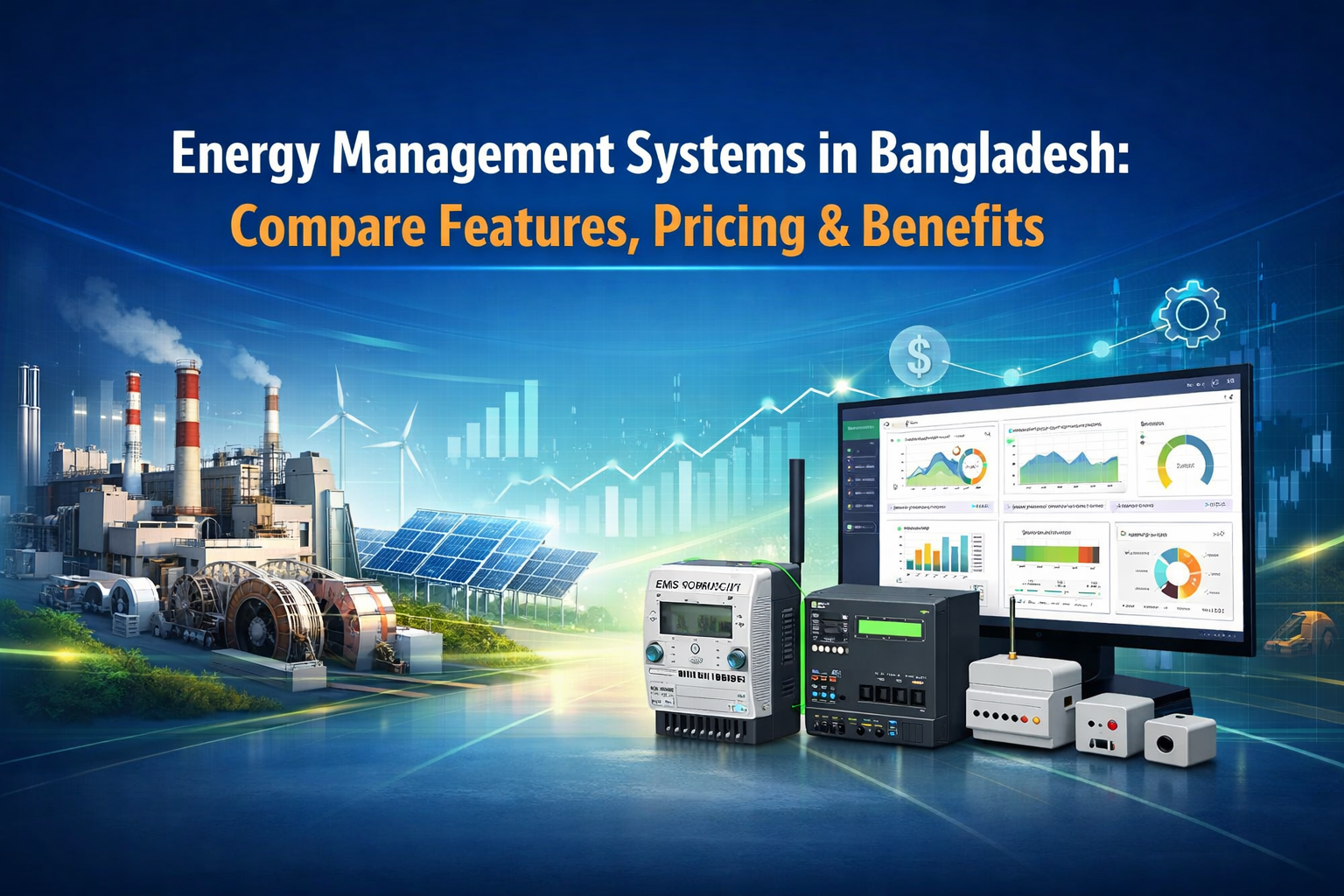
Actually, energy is the lifeblood of every industry, but in Bangladesh, skyrocketing costs along with hidden inefficiencies are eating into profits quietly. Numerous textile factors, manufacturing clients, as well as commercial buildings mostly operate without even having real-time visibility, and it leads to wasted energy, unplanned downtime, and inflated bills.
An energy management system in Bangladesh isn’t just a monitoring tool. Over and above that, it’s also a smart, powerful solution that converts energy data into actionable insights, enhances operations, manages inverters, and boosts efficiency.
In this blog, we’ll take a look at why EMS is a must-have for industries, its standout features, the best solutions in Bangladesh, costs, ROI, along with real-world use cases. Furthermore, why Logics Power is the trusted choice for smarter energy management.
What Is an Energy Management System (EMS)?
An Energy Management System (EMS) is a comprehensive platform that is actually designed in order to help industries monitor, control, and optimize their energy usage.
Rather than guessing where energy is exactly being wasted, an EMS gives you clear and actionable insights that can smartly improve your efficiency, reduce costs, and enhance operational performance.
Key Components of an EMS:
-
Monitoring: It tracks energy consumption from equipment, machines, along with utilities in real-time, and helps identify inefficiencies before they even escalate.
-
Analytics: The system processes raw data into meaningful insights, showing patterns, peak usage times, as well as potential saving opportunities.
-
Control Systems: It also automates energy operations like turning off idle machinery, adjusting loads, or sometimes managing inverters just to ensure energy is used efficiently and reliably.
Modern EMS truly goes beyond simple measurement; it actively guides businesses to make smarter and faster decisions while maximizing the return on every unit of energy.
Why Industries in Bangladesh Need EMS?
Energy efficiency can’t be ignored. Here’s why, actually, industries in Bangladesh need an EMS: rising costs, high consumption, along with inefficient demand, and smarter energy management:
Key Reasons:
-
High Energy Consumption: Industrial operations run heavy machinery, HVAC systems, lighting, and backup power continuously. EMS offers real-time visibility and helps managers identify wastage and optimize usage effectively.
-
Rising Electricity Costs: Electricity tariffs in Bangladesh are being increased steadily, and several unexpected spikes cause bills to be inflated. EMS monitors energy use and analyzes patterns while helping industries plan demand to lessen monthly costs.
-
Need for Efficiency: Efficiency affects productivity, equipment lifespan, along with operational reliability. And, EMS automates controls, handles inverters, and sends proactive alerts in order to avoid downtime and keep operations smooth.
Best EMS Solutions in Bangladesh
The requirement for a reliable energy management system in Bangladesh is becoming popular quickly, especially in several industries like textiles, manufacturing, along with commercial facilities where energy costs are high. But not every EMS delivers real value. Some only provide basic monitoring, and the best solutions focus on cost savings, efficiency, and long-term scalability.
What industries should compare before choosing an EMS:
-
Vendors: Always choose providers with real experience in industrial energy monitoring and strong local technical support.
-
Features: The most effective systems provide real-time monitoring, inverter monitoring, as well as load analysis, automated alerts, and detailed reports for energy that help reduce energy wastage.
-
Scalability: A good EMS should easily expand from one plant to multiple facilities without even needing a major system change.
Cost of EMS in Bangladesh
When it comes to the cost of an energy management system in Bangladesh, it actually depends on various factors such as plant size, monitoring level, and how detailed energy insights a business exactly needs. Here’s a more detailed view:
-
Hardware:
It includes smart meters, sensors, data loggers, along with inverter monitoring devices. Costs increase when machine-level monitoring is needed rather than only main-line tracking.
-
Software:
Advanced EMS platforms give real-time dashboards, load analysis, automated carters, cloud access, and detailed reports, and help businesses reduce energy wastage and control costs.
-
Installation:
It includes site inspection, wiring, system configuration, sensor calibration, as well as staff training. Proper installation actually ensures accurate data and faster return on investment for industries.
Use Cases
An energy management system in Bangladesh becomes even more valuable when it’s applied to real industrial environments. Rather than just monitoring electricity, it helps businesses identify energy waste and improve efficiency while protecting long-term operational performance. Here’s how exactly it works across the most energy-intensive sectors:
1. Textile Industry
Textile factors actually consume enormous amounts of energy through spinning, weaving, dyeing, along with finish processes. Most of the units operate 24/7, which makes even small inefficiencies expensive.
Also, this approach helps monitor energy usage across production lines, track high-consumption machines, and manage peak load effectively. Moreover, it also supports inverter monitoring and real-time alerts, and helps factory managers reduce energy waste without even affecting production output.
2. Manufacturing Industry
Now, manufacturing units mostly run multiple heavy machines at the same time, which leads to unpredictable energy consumption and higher electricity bills. With an EMS, businesses can track energy usage machine by machine, identify equipment that consumes excessive power, and optimize operating schedules.
This not only reduces costs but also improves equipment efficiency and avoids unexpected downtime due to energy-related issues.
3. Commercial Buildings
In commercial buildings, the biggest energy consumption generally comes from HVAC systems, lighting, elevators, and backup power systems. The energy management system helps monitor real-time energy usage, control unnecessary consumption during non-working hours, and improve overall efficiency.
For building owners, it means lower operational costs, better energy planning, along with a more sustainable facility without even compromising comfort or performance.
Why Choose LogicsPower?
Most EMS providers primarily focus on monitoring, but industries actually require accurate insights, reliable performance, and measurable cost savings. That’s exactly where Logics Power delivers real value. Here are some more reasons why you should choose this brand:
-
Industry-specific solutions: The brand actually builds EMS according to real industrial environments like textile factories, manufacturing plants, along with high-load operations, rather than providing just generic monitoring platforms.
-
Actionable real-time insights: The platform does more than show energy data. Beyond that, it also helps businesses identify wastage and control peak demand while improving operational efficiency with operational insights.
-
Scalable for multiple facilities: Logics Power gives industries an edge to monitor one plant today and easily expand to numerous locations without even altering the entire system later.
-
Reliable monitoring and alerts: Accurate real-time monitoring, inverter tracking, and smart alerts assist industries in avoiding downtime and reducing energy losses while maintaining stable operations.
-
Focused on long-term savings: Its system is specially designed in order to decrease electricity costs consistently, improve equipment efficiency, and support smarter energy planning for growing industries.
Conclusion
Numerous industries in Bangladesh don’t struggle with just energy consumption. But they struggle because they don’t get a clear visibility into where energy exactly goes.
A well-maintained energy management system tackles this problem just by converting raw data into practical decisions.
No matter if it’s a textile unit, a manufacturing plant, or even a commercial facility, the right EMS always helps to eliminate unnecessary costs, improve efficiency, and ultimately makes operations far more predictable in the long run.
If you’re planning to upgrade your solar monitoring strategy, this is the right time to get started with Logics Power.