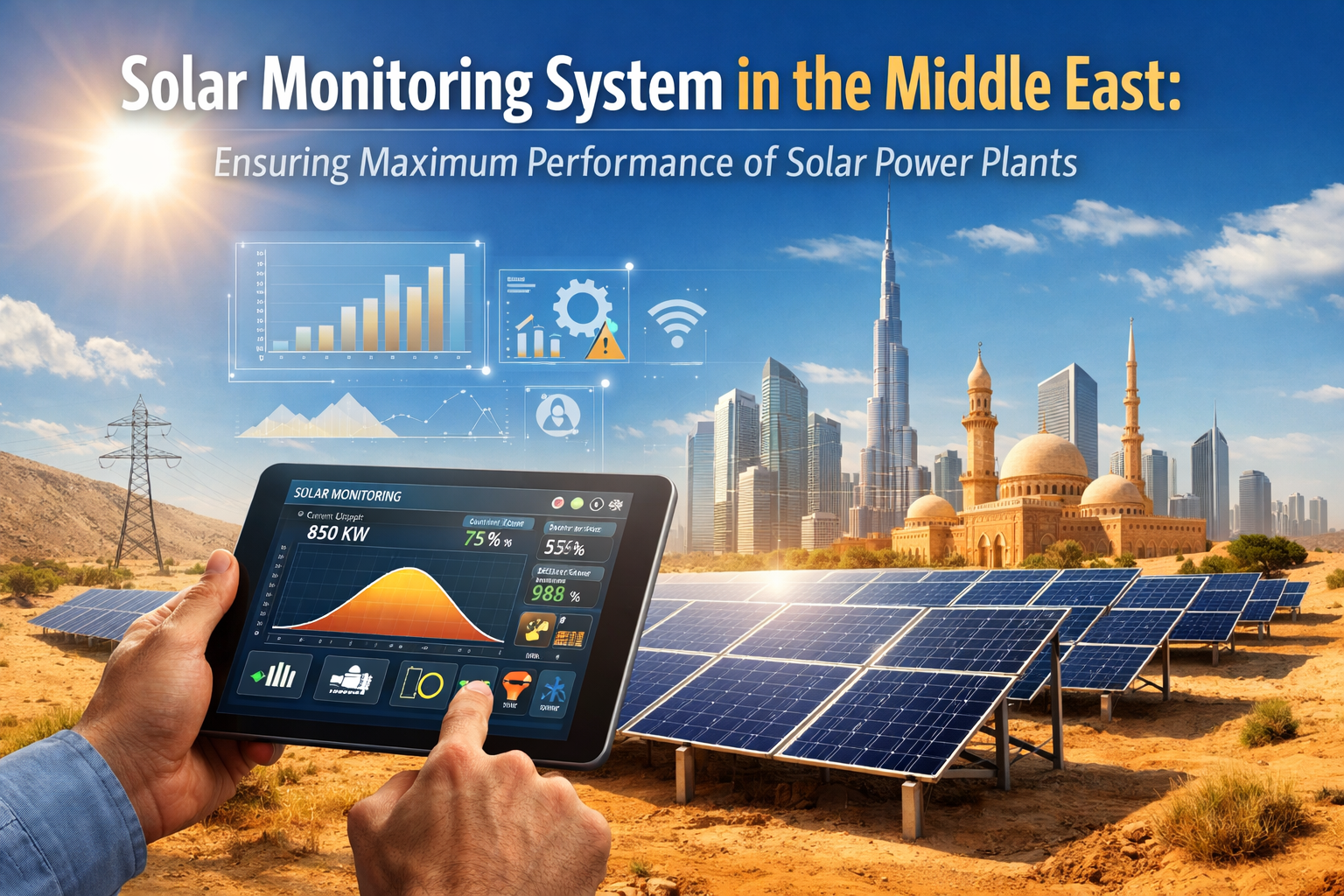
Solar Monitoring System In Middle East
Besides traditional sources of energy such as oil and gas, the Middle East is now also known for solar power. There are several projects that are being run on solar energy.
As most industries in the Middle East are switching to solar power, they need a solar power monitoring system. It is a device that tracks the performance of solar systems in real time and also detects issues that may impact energy output from solar panels. Solar monitoring system tracking how much power solar panels produce to power consumption, to how much power is stored in lithium batteries.
Solar Energy Boom In Middle East
The Middle East is currently experiencing a solar energy boom. With abundant sunshine, declining technology costs, government support for economic diversification, countries in the Middle East are launching solar projects.
Easy & Continuous Sunlight
In Middle Eastern countries there’s abundant and consistent sunlight. This is why solar energy is an efficient and cost-effective option here.
Cost-effective & Efficient
In order to reduce dependency on fossil fuels, more countries in the Middle East are shifting to solar power.
Low Solar Tariffs
Solar power is one of the cheapest energy sources in Middle Eastern countries.
Government Support
Government policies in the Middle East back solar power.
What Is A Solar Monitoring System
A solar power monitoring system is a device that keeps a check on the solar system by using real-time data and detecting issues which might reduce the energy output from solar panels. A Solar monitoring system also tracks how much power is used, stored. available, and wasted.
This device can detect issues like wiring problems, shading, dust buildup, faulty solar panels, solar inverter errors. The best part about this device is that it comes with a solar monitoring app that allows remote monitoring. Users can also check current and previous data from the dashboard. Solar monitoring sends alerts when something is wrong.
Types Of Solar Monitoring Systems
Based on the level of data collection there are 3 main types of solar monitoring systems: panel-level monitoring, string-level monitoring, and system-level monitoring.
-
Panel-Level Monitoring System
This type of solar management system tracks and monitors energy output from each solar panel. This helps in detecting which panels are performing good and which are underperforming. All of this helps users to ensure peak performance from each solar panel.
2. String-Level Monitoring System
String-level monitoring system tracks output of each string (a small group of panels wired together). This is most commonly used for residential purposes.
3. System-Level Monitoring System
The system-level monitoring system is designed to track the performance of all the solar panels combined. It is ideal for rooftops which have shading and orientation issues.
Components Of Solar Monitoring System
Major components of the solar monitoring system are sensors and meters. The sensors are used to detect irradiance, temperature and voltage. Meanwhile, meters collect readings. The solar monitoring system also includes a cloud platform for processing and an application for users to check real-time data, reports, alerts and performances.
Hardware Components
-
Sensors & Meters
-
Data Logger
-
Communication Module
-
Inverter/power
-
Remote Terminal Unit
Software Components
-
Cloud server
-
Mobile Application or Web portal
-
Daily analysis & reports
Benefits Of Solar Monitoring
The biggest benefit of using a solar power monitoring system is that it will help you increase your profits and also minimize the risk of solar panel malfunction. It also helps in flagging issues like reduction in power output and inverter malfunction, etc.
-
Boost Solar Panel Efficiency
Solar monitoring systems detect faults at a very early stage. Timely identification of issues help fix problems on time without impacting solar panel output.
2. Save Money & Time
When technical errors are detected on time, the money and time spent on fixing them is less.
3. Track Energy Consumption
Solar monitoring systems release regular data to track energy consumption. It also provides info on when the solar system generates the most power in the day. All of this helps you function more efficiently.
4. Remote Detection
Solar plant monitoring systems come with a mobile application or web portal that allows you to track everything from any location in the world.
5. Fault Detection
The best solar monitoring system detects faults at a very early stage. This not only helps get issues resolved quickly but also ensures no negative impact on the output.
Role Of Solar Monitoring Application
The main role of solar monitoring applications is to offer real-time insights of the system’s performance. It allows users to not only track energy generation, faults but also helps optimize energy efficiency, save money. With timely data analysis and reports, solar pv monitoring system’s longevity also increases because every issue can not be detected at an early stage. It helps in boosting performance, increasing ROI, and supporting sustainability.
Main Functions of Solar Monitoring System
-
Real-Time Tracking
-
Fault Detection
-
Performance Optimization
-
Energy Management
-
Reporting & Analytics
Why Choose Logics Power Solar Monitoring Solutions
If you are looking for solar management solutions in the Middle East, Logics Power offers customized solutions at affordable prices. With more than 15 years of experience in this industry, Logics Power is one of the most trusted and reliable solar monitoring system suppliers in the Middle East.
Frequently Asked Questions
-
Is a solar monitoring system worth your money?
Yes. It will not only minimise safety risks but also increase your ROI significantly and boost your solar panel performance.
2. Will my solar monitoring system function during a power outage?
If you have invested in an inverter solar monitoring system, then it will function even during power outages.
3. Can I add monitoring to my existing solar system?
Yes, definitely. All you need to do is add a small monitor or energy meter along with an inverter to your solar system and you’re good to go.